23–24 January 2027 · Veliky Novgorod
ЗИМНИЕ ВЫХОДНЫЕ ВЕЛОКРОССА · 3ВВ
Два дня ТИПАЦИКЛОКРОССА: Cyclocross, Gravel, Fixed gear, МТБ и беговой кросс. Один день или оба.
23–24 January 2027 · Veliky Novgorod
Два дня ТИПАЦИКЛОКРОССА: Cyclocross, Gravel, Fixed gear, МТБ и беговой кросс. Один день или оба.
19 June 2027 · Batetsky
Tsar Grader 202725 October — 7 November 2026 · XCnews
INOCROSSApril 10-11, 2027 · Veliky Novgorod
Spring Cyclocross WeekendFrom 22 November 2026 · Saint Petersburg and the Leningrad Region
WINTER CUP XCNEWS499 ₽ / month · Для гонщиков
FATRACING PREMIUMОт 2 999 ₽ / month · For business
FATRACING PRORelease name: "Palych"
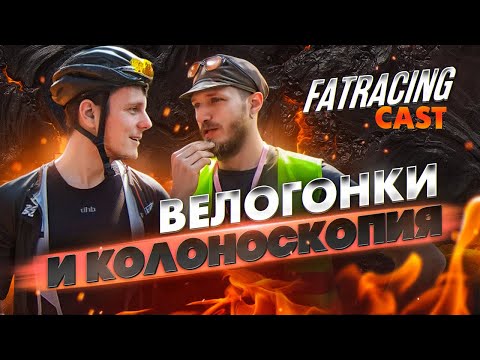
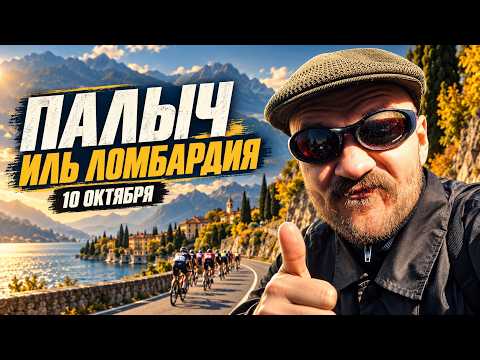
A relaxed episode: Ilya and Kostya call Palych, who has lived in Vietnam for years, while watching Paris–Roubaix 2024. Palych explains how he trains in a major city where it is only light and cool between five and seven in the morning, why he sticks to inner tubes, and how he built a road bike weighing around 6.3 kg.
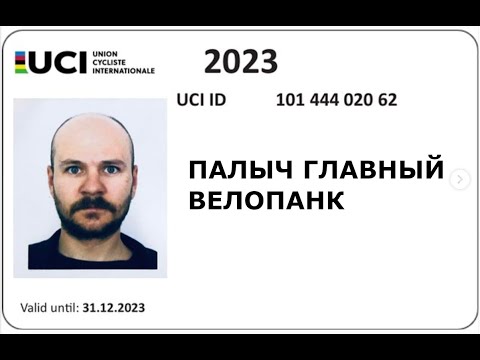
An amateur racer, lives in Vietnam, works as a bike fitter and mechanic in a bike shop, rides road and MTB, once won the Tour de Selishchi.
The Novgorod cyclist, a friend of Ilya, is going to help his teammates on the Tour de Selishchi in the new season; now he is a FATRACING coach.
Palych rides on the road with tubes: in hot weather, at high pressure, the sealant doesn't cope, and in a group, he also splashes his neighbours. His lightweight tyre with a tube turns out to be no heavier than a tubeless one.
For himself, Palych drew the line by width: wide tires at low pressure are tubeless, narrow road tires use tubes, a CO2 cartridge, and a compact spare.
On a flat race from the finish line, it is better to save on the wheel and not start a sprint per kilometer: those who give out early die, and the victory goes to those sitting behind.
If there are no climbs around, you can prepare for the mountain race by repetitions on the only available elevation, even if it is a bridge with a set of 50 meters.
A cyclist abroad cannot save on insurance: without it, good local clinics are not available, and surgery in an expat clinic is expensive.
In a foreign country, Palych was rescued by local acquaintances who, along the chain, found a specialized specialist for little money.
Palych kept two wards for himself: at three he was already beginning to confuse the nuances of well-being, weather and tasks of each.
The conversation begins with memories: Palych once drove a Tsar Grader in tandem with a partner with whom he had never ridden together before the start. According to him, in a straight line, the tandem flies like a barge on any surface, but on bumps and in turns it is extremely slow, and the second half of the race they were already riding on pure stubbornness. Ilya and Kostya now want to repeat this experience in the same tandem.
Now Palych is riding someone else's aluminum criterion bike with rim brakes and mechanics — hard, uncomfortable, but very emotional. His main bike is a Specialized Tarmac SL6, but there are almost no races for which he is needed in Vietnam.
Amateur races in Vietnam are short, up to 70 km, of a criterion type, with jostling and blockages. But this is a festival: inflatable arches, a column of motorcyclists in front of the peloton, live broadcasts of even amateur starts on TV, a banquet and good cash prizes. Races are rare, about once a month.
Palych works in a large store selling top-end Trek, and travels as a mechanic and guide on MTB tours in Vietnam and Cambodia — for example, around the temple complex, where official races are held. He was going to go a multi-day trip across the country for a professional team, but it fell through because of the rule about foreigners in the squad. He also remotely trains two Russian-speaking riders and believes that he will not be able to conduct more than two wards qualitatively.
In Ho Chi Minh City, you can train only from five to seven in the morning, while there is no traffic and heat: rise at 4:20, the form is assembled in the evening, a quick breakfast — and to the meeting place with the group. The city is absolutely flat, so Palych prepares for the mountain race by repeating on the bridge with a set of about 50 m 15 times in a row. Add polluted air — it is very difficult to be motivated without racing.
Group races in local clubs are arranged through the application: a limited number of places, route, captain and difficulty level from easy to the fastest. Palych has a week — two club races, a quick Vietnamese "warm-up" in circles across the bridge, trips with his wife to MTB, and two weeks before the race he himself rearranges the plan for a specific start.
Before recording, Palych did not travel for two weeks: after poisoning and sore throat, his knee became inflamed and swollen without any visible injury, the fluid was pumped out of it. It was possible to find a normal doctor only through acquaintances — it's hard to look for medicine in a foreign country yourself. Now he is advised to donate blood and, possibly, adjust his diet.
Separately, he warns: abroad, especially cycling, you can not stay without insurance. Once he shattered his collarbone in Vietnam, the operation was offered to him for a lot of money, and he flew to repair it to Russia under a policy.
Ilya says that he is holding the Tour de Selishchi for the last time: the race is going on without blocking roads, and he is afraid of responsibility for the accident. Instead, he dreams of a criterion in the center of Novgorod. There are also plans for a joint cyclocross cup with a Moderator: six stages, three from each organizer.
Palych, who once won a village from a sprint, advises not to forget to eat and drink and not to waste energy on a straight line before the finish — he then calmly sat on wheels while others handed out. Kostya says that he is going to help comrades who have chances in their age categories, and all three agree: without teamwork, the group road race loses its meaning, and in pursuit of a breakaway, the group usually does not agree.
During the broadcast, they discuss the average weight of riders in the peloton, record speeds of classics, other riders' punctures, and the benefits of cyclocross experience for riding on cobblestones. Palych recalls the Kaliningrad cobblestones, which are painful to ride on with a road bike, and notes that they were lucky with dry weather at Roubaix.
In the end, they talk about technology: Shimano versus SRAM, unsuccessful integrated solutions on expensive air frames, expensive branded seatpins and inadequate price tags of top-end bicycles. Palych praises the carbon saddles of the Petersburg master and admits that hydraulic discs have to be adjusted almost every week.
Paris — Roubaix · Tsar Grader · Tour de Selishchi · Moder · Specialized Tarmac · Trek · Shimano · SRAM
Upcoming races and useful sections of FATRACING.
Instagram belongs to Meta Platforms Inc., whose activities are recognized as extremist and banned on the territory of the Russian Federation.