23–24 January 2027 · Veliky Novgorod
ЗИМНИЕ ВЫХОДНЫЕ ВЕЛОКРОССА · 3ВВ
Два дня ТИПАЦИКЛОКРОССА: Cyclocross, Gravel, Fixed gear, МТБ и беговой кросс. Один день или оба.
23–24 January 2027 · Veliky Novgorod
Два дня ТИПАЦИКЛОКРОССА: Cyclocross, Gravel, Fixed gear, МТБ и беговой кросс. Один день или оба.
19 June 2027 · Batetsky
Tsar Grader 202725 October — 7 November 2026 · XCnews
INOCROSSApril 10-11, 2027 · Veliky Novgorod
Spring Cyclocross WeekendFrom 22 November 2026 · Saint Petersburg and the Leningrad Region
WINTER CUP XCNEWS499 ₽ / month · Для гонщиков
FATRACING PREMIUMОт 2 999 ₽ / month · For business
FATRACING PRORelease name: "Palych"
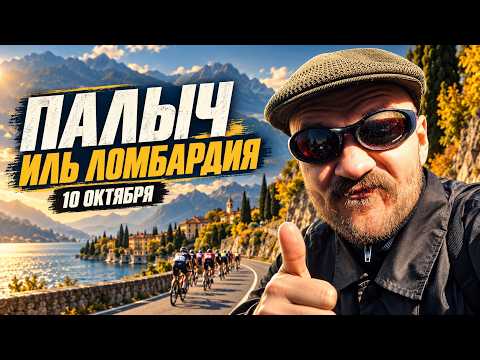
Palych is a bikefitter and an amateur racer, whom many people know from the podcast "Velochudiki". Over the past year and a half, he has lived in Abkhazia, St. Petersburg, Georgia and Turkey and has now settled in Serbia. The conversation with Ilya goes to the broadcast of the Tour de France — about racing in new countries, switching to disc brakes, the benefits of a coach and how not to overtrain.
Anton, better known as Palych, is a bikefitter and an amateur cyclist; at the time of recording, he lives and works in Serbia.
On long mountain descents, rim brakes erase the brake track of carbon rims. Palych in Turkey switched to aluminum wheels, and then to a bicycle with disc brakes.
Palych can write a plan himself, but he wouldn't execute it. A plan from another person is carried out even in the rain and after a party.
When working remotely with a trainer, the power plan is clearer and easier to control.
Palych calls recovery the main thing in training. The most common mistake of an amateur is overtraining, in which progress is worthwhile despite efforts.
If there is no base, interval and strength training should be introduced gradually, and not drive yourself from the first weeks.
Burnout can be manifested by inattention in the group. It is better if the decision to rest comes with the head, before the signal from the body.
Palych's experience abroad: clients come by word of mouth. A well-done job leads new people better than a beautiful profile on social networks.
Palych believes that, taking into account Russia, he has already lived in five countries for more than a month: winter in Abkhazia, summer in St. Petersburg, two months in Georgia, six months in Turkey, and at the time of recording — the second month in Serbia. They left, he says, for nowhere, not understanding where and why.
In Georgia, he liked that most of the interesting get-togethers had moved there and people were opening workshops and coffee shops, but there were few contacts with locals. He remembers the Turks as sympathetic people: if you break down, even non-cyclists will take you to the village for free. In Serbia, they like the design of cities and a comfortable train between Belgrade and Novi Sad, and the local slowness, according to his observation, is manifested in the fact that people do not know how to say "no": they agree, and then the frames blur.
In Turkey, Palych raced twice at the Grand Fondo and both times was sixth in the absolute. The tracks are about 2000 meters of set per hundred kilometers, sometimes due to a single ascent of about 30 km in length. For him, with a weight of about 74 kg at that time, this is not a profile relief, but he is pleased with the result.
The first goal in Serbia is to get a license and start riding local races. MTB-the hangout there is very developed, there is a calendar of cross-country and marathons, and you can participate only through the team — Palych thinks it's right: unlike Russia, you can't just pay a fee and start a group race. The tracks there are of a completely different scale: descents and ascents for 20-40 minutes, changing coverage, both physical and technical load. At one of the training sessions, he rode with the multiple champion of Serbia, who bounced up and down on the descent so that the wheels were at head level.
For many years, Palych rode with rim brakes and carbon wheels and never felt any lack in them. But on long Turkish descents, he noticed how the brake track of the rim wears down and saw others with rims worn down to a noticeable groove. In Turkey, he rode on aluminum wheels and then took a road bike on discs and got used to it in a day.
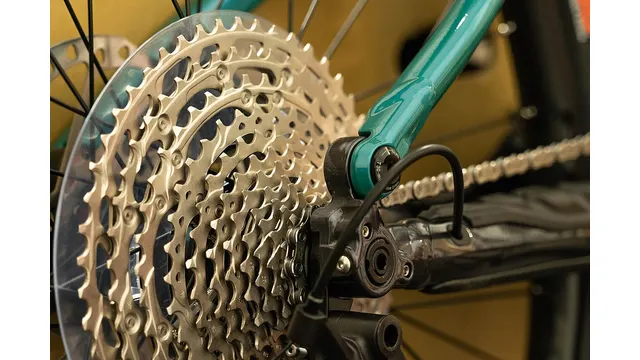
The new frame is tougher and faster, although, according to him, three hundred grams heavier than the previous one — about 7 kg. He doesn't like the SRAM groupset after Shimano: Shimano has better ergonomics of handles, and SRAM shifters are large and not divided into sizes, which, according to interlocutors, is inconvenient for small hands. As a result, the interlocutors do not see any special advantages of wireless switching.
Palych divides the service as follows: he gives the forks and the suspension to the specialists, does the rest himself, if there is a tool, and if not, in the workshop. A separate story is the track frame S—Works 2009 for street criteria, which he will not sell: you will not find such a bike for the city anymore.
Since autumn, Palych has been training according to a coach's plan. Initially, the plan was based on heart rate, then they switched to power: according to him, this makes the plan clearer, and it's easier for the coach to monitor progress remotely. He hasn't done any tests yet, though he wants to ride a classic one-hour event.
The main value of a coach for him is not even in knowledge — he could have written the program himself, but he would not have done it. When another person writes a plan, respect and responsibility are triggered: even after a party the day before or in the rain, the training is done because they have already thought for you.
To Ilya's question about the main life hack, Palych calls sleep and recovery, although it is not always possible to get enough sleep. The second is not to drive yourself: if there is no base, interval and strength training should be added gradually. Ilya notices that all experienced guests say the same thing: the most common mistake is overtraining, when a person plows harder and harder, but there is no progress.
The most difficult thing, according to Palych, is to rest. Burnout can manifest itself not only in unwillingness to get on a bike, but also in loss of concentration, and this is already dangerous in a group. It is better if you reach the rest with your head, not with your body.
Palych's most memorable fall was at the Russian Championship in Belgorod in 2017: in the crash, he received deep wounds from the chainring on his calf, but he finished and was sixth. He says he doesn't have fear after falls — rather, he feels sorry for the bike.
The whole conversation is taking place against the backdrop of the Tour de France: sprint victories are being discussed, the possible end of the sprint legend's career, the return of Pogachar after a fracture and the confrontation between Van Art and Van der Poole, which are interesting to follow in cyclocross. The interlocutors do not hide their skepticism about the purity of professional sports, but leave it at the level of doubt.
Palych is already earning Bike fit in Serbia: the local crowd is slowly starting to get interested, they communicate mainly in English, although Serbian is similar to Russian. The work there, according to him, is based on recommendations, not on a beautiful Instagram: if a person likes it, he will bring others. Ilya recalls that in Turkey, Palych seemed to be the only bikefitter in those parts.
At the end, they discuss the approaching Tsar Grader: this year the interlocutors call the track easy and expect the average of about 35 km/ h from the leaders, but it is not yet clear which of the strong riders will arrive.
Velochudiki · Tour de France · Tsar Grader · SRAM · Shimano · Specialized S-Works
Upcoming races and useful sections of FATRACING.
Instagram belongs to Meta Platforms Inc., whose activities are recognized as extremist and banned on the territory of the Russian Federation.