23–24 January 2027 · Veliky Novgorod
ЗИМНИЕ ВЫХОДНЫЕ ВЕЛОКРОССА · 3ВВ
Два дня ТИПАЦИКЛОКРОССА: Cyclocross, Gravel, Fixed gear, МТБ и беговой кросс. Один день или оба.
23–24 January 2027 · Veliky Novgorod
Два дня ТИПАЦИКЛОКРОССА: Cyclocross, Gravel, Fixed gear, МТБ и беговой кросс. Один день или оба.
19 June 2027 · Batetsky
Tsar Grader 202725 October — 7 November 2026 · XCnews
INOCROSSApril 10-11, 2027 · Veliky Novgorod
Spring Cyclocross WeekendFrom 22 November 2026 · Saint Petersburg and the Leningrad Region
WINTER CUP XCNEWS499 ₽ / month · Для гонщиков
FATRACING PREMIUMОт 2 999 ₽ / month · For business
FATRACING PROTitle of the issue: "How to win a grav race//Max Karginov//Muur Cycling Club"
Max Karginov came to cycling through a Moscow fix-party, and now from Girona he tells the Russian-speaking audience about what is happening in world cycling. With Ilya, they figure out why Traka has become a European Unbound, how the formats of gravel races differ and what kind of rubber to put on them. In the second half — the trends of road and gravel bikes and an honest conversation about earnings in cycling blogging.
The author of the Muur Cycling Club telegram channel is a Muscovite who has been living in Girona since 2020, works in marketing and rides on highways and gravel.
Thousands of people come to Girona for the race week, and there are also holidays and a flower festival nearby. Housing should be sought from December, otherwise only neighboring cities will remain.
The worse the coating, the more wide rubber wins. Max considers 45-50 mm optimal for Traka, 40 mm is enough for fast races.
If the frame allows, put the rubber wider: she forgives mistakes and makes driving through difficult sections easier.
Quickly repair a puncture, eat right and distribute forces for many hours is more important than peak power.
Even a friend with a bottle at the food point saves unnecessary stops. For top teams, a pit stop takes less than a minute.
You can prepare for it and drive it with pleasure, and 300+ km is more of an elite story that requires special skills.
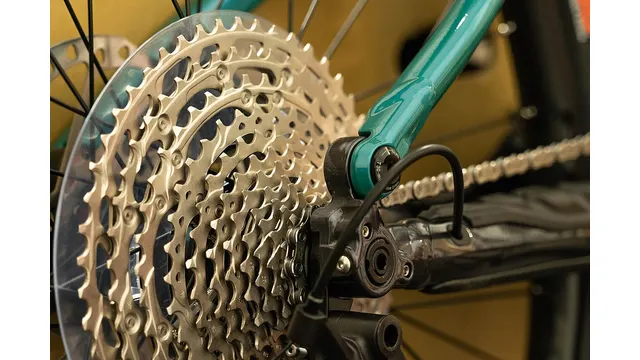
Large front chainrings for professionals are needed not to spin the 11th sprocket in the back but to ride on the middle cassette sprockets with less loss.
Speed limits, prohibition signs and pedestrian zones also apply to cyclists. It is precisely because of violations that local residents are dissatisfied.
Max explains that Muur in Flemish means a steep wall, and you can pronounce the name however you like — they'll understand everywhere. The bike has been with him since childhood, but he got serious about it in his twenties through commuting and Moscow's fixed-gear subculture: he bought his first fixed-gear bike on the forum for eight thousand rubles and assembled it with friends from whatever they had. Then there were racing fixed-gear projects, criteriums, track, road, and after moving to Spain, he got into gravel.
Max and his wife moved to Girona in the spring of 2020, a week before the lockdown, with a remote job in marketing. The city was chosen for the climate, the nature nearby and the opportunity to go on endless routes in 15 minutes. In the same place, in lockdown, on the advice of his wife, he started a telegram channel to talk about bicycles in simple words. The channel is growing almost without advertising, and Max is not looking at the number of subscribers, but at how the materials respond and diverge.
Max calls Girona the European cycling hub: professionals and people from the cycling industry live there, so you can see a lot right on the street or learn from friends who ride for brands. At the same time, brands are careful with leaks, and releases usually become known on the day of release. For a while he worked in a bicycle project in Girona, which gave access to prototypes and insiders.
Max launched his YouTube channel recently and plans to release a video magazine once a month: what happened during the month, races, technical innovations and some personal stories. The pace is not fast yet: the family is expecting their first child, and because of this, he is skipping Traka this year.
Traka has grown from a meeting for 120 people into one of the largest gravel events in Europe: this year there are about 4,800 registered at distances of 100, 200, 360 and 560 km. There is not enough accommodation in a small Girona for a race week, so Max advises booking back in December. The race is held by a local company that makes off-road events and the Gravel Earth Series; according to him, this is gravel, where it is more important to make an event that you want to return to than to gather professionals for a photo. Separately, the organizers monitor garbage and ecology.
Officially, Traka does not call itself a race: for this, according to local laws, the entire route would have to be blocked, which would cost a lot of money. Therefore, the roads are open and participants are required to comply with the rules, but there is a race results, a podium and prize money. Ilya notices that the "Tsar Grader" is arranged in the same way. The main distance has now become 360 km: all tops go there. Max is looking for favorites among those who ride long races all season — the ability to repair a puncture in half a minute, eat and distribute forces for 11 hours is more important here than pure speed.
He speaks calmly about local residents: there are no conflicts if visitors follow the rules — speed limits, "bricks" and pedestrian zones also apply to cyclists.
Traka and American Unbound are close in dates, so it's difficult to combine them: American racers usually bet on Unbound, which is part of the prestigious Lifetime Grand Prix series. According to Max's observation, few people are specially brought to the UCI Gravel World Championships. His favorite format is the Belgian Waffle Ride in San Diego, where half of the distance goes on asphalt, and half on dirt and singletreks: the idea is that the perfect bike does not exist.
The Grinduro series are tougher routes with stones, where tires in inches or hard MTB are appropriate. On Traka, Max considers the optimal width to be 45-50 mm, and 40 mm will be enough for fast Baltic stages. There are UCI races on absolutely flat fields in Belgium and the Netherlands, mountain starts around Girona and ultra-distances in the Pyrenees.
The finishes are different: on Unbound there were sprints in groups of nine to ten people, and on Traka 360 riders usually come alone. Support plays a huge role: for top teams, a pit stop resembles Formula 1, and even a friend who will serve a bottle to an amateur saves time at stops.
Max explains the phenomenon of gravel simply: adults are increasingly coming to the bike, and many are afraid to ride next to cars. Gravel allows you to stay away from traffic, be in nature, and falls from the side seem less traumatic. The gravel pit is versatile and all-season, you can ride it to work with wings and participate in races, and MTB requires more skills.
Racing gravel, in his opinion, will continue to grow for a long time, including in Russia, where five to six races per summer have appeared within reach of Moscow and St. Petersburg for several years. He considers the distance of 200-250 km ideal for a strong amateur: you can prepare for it and drive it with pleasure. Ilya says that the cash prize for 250 km "Tsar Grader" from one of the bloggers lured several strong riders to a long distance.
Whether there is money in cycling, according to Max, depends on whether you know how to bring an audience and sell yourself. Cycling brands don't pay the most: a blogger can work with hotels, airlines and other partners if his stories include trips and life around racing. He gives examples of European authors for whom content has become a full-fledged job. Separately, Max explains his principled position against the sale and purchase of bicycles of dubious origin: his professional friends in Girona have repeatedly been left without bicycles due to thefts.
He himself reads the independent bike edition of Escape Collective and advises his subscription, watches videos of experienced bike journalists and local authors from Girona, follows Russian-speaking bloggers, including Misha the Athlete.
Max talks about the new Colnago Y1Rs, saying it's a tool for a specific top rider in the world: they made it as fast as possible in the wind tunnel, beauty is secondary here. On the road, according to his observation, after the era of universal bikes, there's a split again into ultralight and aerodynamic ones. There will be more gears, electronic transmissions in all price segments, 28–30 mm tires as the norm, and large front chainrings—not to pedal a heavy gear, but for a straight chain line on the working sprockets. His favorite road bike is the Cannondale SuperSix.
In gravel, the main trends are wide tires and wide rims: MTB tires are faster than gravel ones on poor surfaces, and on smooth surfaces, the difference is small. Bikes are divided into racing, adventure, and all-around, and Max names suspension as the third trend, including special gravel forks with a small travel. He rides a Santa Cruz Stigmata, which fits very wide tires, and considers it the best way to compensate for a lack of technique. In the SRAM vs Shimano debate, he sides with SRAM: he admits that Shimano works slightly better on the road, but values SRAM's component compatibility between MTB, gravel, and road.
Traka · Unbound · Belgian Waffle Ride · Grinduro · Gravel Earth Series · Lifetime Grand Prix · Tsar Grader · Escape Collective · Colnago Y1Rs · Santa Cruz Stigmata · SRAM · Shimano
Upcoming races and useful sections of FATRACING.
Instagram belongs to Meta Platforms Inc., whose activities are recognized as extremist and banned on the territory of the Russian Federation.