23–24 January 2027 · Veliky Novgorod
ЗИМНИЕ ВЫХОДНЫЕ ВЕЛОКРОССА · 3ВВ
Два дня ТИПАЦИКЛОКРОССА: Cyclocross, Gravel, Fixed gear, МТБ и беговой кросс. Один день или оба.
23–24 January 2027 · Veliky Novgorod
Два дня ТИПАЦИКЛОКРОССА: Cyclocross, Gravel, Fixed gear, МТБ и беговой кросс. Один день или оба.
19 June 2027 · Batetsky
Tsar Grader 202725 October — 7 November 2026 · XCnews
INOCROSSApril 10-11, 2027 · Veliky Novgorod
Spring Cyclocross WeekendFrom 22 November 2026 · Saint Petersburg and the Leningrad Region
WINTER CUP XCNEWS499 ₽ / month · Для гонщиков
FATRACING PREMIUMОт 2 999 ₽ / month · For business
FATRACING PRORelease name: "Denis Bolotov"
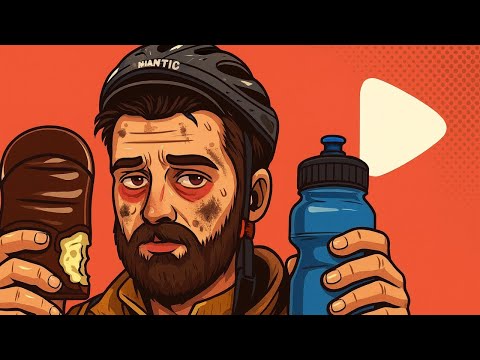
Ilya recorded the first issue of the podcast while visiting Denis Bolotov in Zelenograd. Denis came to cycling through hiking and cycling, and for the last two years he has been purposefully training with a coach for Paris — Brest — Paris. A conversation about how such training is arranged, what is on the road and why you still need to drink at night on a log.
A cyclist from Zelenograd, a robotics programmer, rides brevets and prepares for Paris — Brest — Paris, one of the ringleaders of the Zelenograd Monday races.
After the heat of the day, the coolness of the night dulls thirst, but dehydration does not go away. Denis stopped drinking when it got colder, and by morning he could barely drive.
If the 200-300-400-600 series is needed for a big brevet, Denis advises taking it twice or starting earlier, for example in Krasnodar, where the season opens in April. Then a breakdown or illness will not deprive you of admission.
With the coach, Denis stopped thinking about how to build a load: the plan adapts to his starts, but it remains for him to fulfill. For a person with a job and a big goal, this saves energy.
In winter — intervals, strength once a week and a trainer, about 10–12 hours a week. In summer — long rides on weekends, and a week before a big brevet, only light training.
Outside of the starts, Denis eats regular food, monitors his weight and tries to get protein with chicken, cottage cheese and cheese. Abstaining from alcohol since the winter, according to him, has noticeably helped with weight.
Denis recalls a heavy backpack on his first bike trip as a mistake. With experience, unnecessary things are weeded out, and riding becomes both faster and more enjoyable.
Ilya on bike FIT was advised with flat feet and a big foot to look for bicycle covers with a wide shoe and a hard sole so that pedaling would be more effective.
Denis advises everyone to ride a fix: after it, you get used to pedaling all the time, and not alternating jerks with a roll.
Denis has been riding a bicycle for as long as he can remember, but he has never been to the section. He calls Zelenograd the ideal city for a bicycle: compact, flat, any point can be driven in twenty minutes — faster than by car or bus.
A noticeable cycling movement, according to him, began last spring with Monday races: three or four people came to the first one, by the end of the summer more than forty people gathered, mostly on fixies, but also on highways with gravel. Alleycats were added, local bars began to support arrivals and give party venues.
The path to cycling began with hiking. About eight or ten years ago, Denis bought a simple steel MTB in a Decathlon, put the trunk on and went on a bike ride with a company found on the Internet — and realized that everything was wrong. Then there were bike bags, the conversion of a bicycle into a touring with a sheep, frames from friends, and later — a fix brought from a business trip to Peru.
The main conclusion from those years is that with experience you take less and less with you. Denis remembers the first trip with a heavy backpack on his back as something that should not be done, but now his style is to go light and faster. The most pleasant trip is touring Armenia and Georgia with a friend: about 800 km in ten days, a hundred a day before lunch, with one small bag and overnight stays in inexpensive hotels.
The main goal of the season is August and Paris — Brest — Paris: 1200 km from the suburbs of Paris to Brest on the Atlantic coast and back, takes place every four years. For her sake, Denis hired a Moscow coach, became more attentive to nutrition and to the choice of components and has been training for about two years. The coach writes the plan remotely and adjusts the load to the starts, and Denis says that this has removed a huge amount of headache from him: he just does what is written.
For the first year, he trained only by heart rate, then an indoor trainer and a power meter appeared. In winter, the plan includes more intervals and strength work, about 10–12 hours per week, in summer — volumes: long rides on weekends, light workouts a week before a big brevet, intervals two weeks before. In summer, it's hard to count the hours: a week with a 400-kilometre brevet, which takes about 17 hours, can add up to 30 hours.
For admission to the PBP, a qualification series of 200, 300, 400 and 600 km is required. Denis's last season fell out due to a one-and—a—half-month business trip, so this year he plans to close the series twice - in Krasnodar, where the season opens earlier, and with the Moscow club - in case of breakdown or failure.
The story that gave the release its name happened two years ago. Denis decided to drive for himself 400 km from Rostov to Anapa in two days, but overslept, left around noon in the heat under +35 and was badly burned. When it got colder at night, he decided not to stay at the motel and drive on — and stopped drinking.
By three o'clock in the morning, after two punctures and a can of energy, serious digestive problems began against the background of dehydration: there was no water, it was about 20 km to the nearest store, the speed dropped to pedestrian. He bought water at a convenience store, and an impromptu procedure with a bicycle bottle helped out. As a result, Denis drove about 330 km without sleep, and his wife picked him up by car. He formulates the moral himself: keep an eye on the water-salt balance.
Denis is a programmer working in robotics: drones and mechanization of mining equipment. In Peru, he went to launch a drilling machine for a mining company and researched the local cycling scene in advance. According to him, Latin America has a cycling season almost year-round, and in Colombia, cycling is like a national sport.
In Peru, he bought a fix from a small local workshop that makes aluminum frames in three geometries and paints each for the customer; the complement cost about $750 in cash. I didn't have time to ride with the locals — after working in the mountains, there were two or three days left before departure.
In addition to the PBP, Denis is going to the Tour de Selishchi and the Tsar Grader, to the races in Sochi and to the triathlon relay in Cherepovets, where he was born: he will ride 90 km of the bike stage, and his comrades swim and run. At the Zelenograd race "Green Mud" he works as the director of the track.
Ilya talks about his projects: he has been conducting cyclocross since 2017, and this season for the first time there will be a cup of four stages. Another Novgorod idea is the night "Kremlet", 200 km in circles of 2.5 km around the Novgorod Kremlin, where the main difficulty, according to Ilya, is psychological. He also shares his bike fit experience, after which he picked up shoes and takeout. In the end, both agree that the fix teaches you to constantly pedal.
Paris — Brest — Paris · Tour de Selishchi · Tsar Grader · Kremlin · Green Mud · Nizhny Novgorod Express · Decathlon
Upcoming races and useful sections of FATRACING.
Instagram belongs to Meta Platforms Inc., whose activities are recognized as extremist and banned on the territory of the Russian Federation.